Decoding trap biases: historical patterns in greyhound racing that shift tote payouts across regional tracks
Alex Simon · Jun 26, 2026
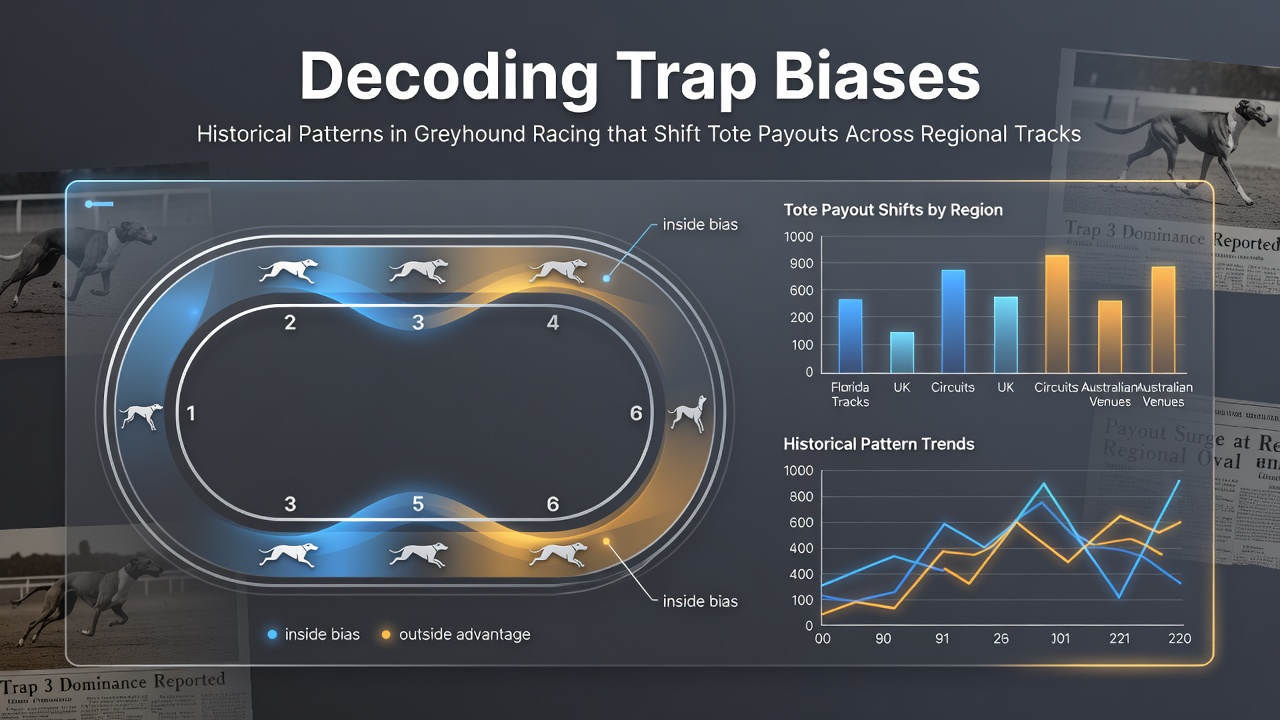
Decoding trap biases: historical patterns in greyhound racing that shift tote payouts across regional tracks
Understanding trap positions and their influence on race outcomes
Greyhound racing relies on numbered traps that release dogs simultaneously at teh start, and historical records show that certain positions have produced consistent advantages or disadvantages depending on track geometry, rail configuration, and surface conditions, while tote systems calculate payouts based on the total pool of bets placed on each runner so biases in trap performance can alter the distribution of returns when bettors overlook those patterns. Researchers at various institutions have examined decades of race data from tracks in Australia and the United States, revealing that inside traps often record higher win percentages on circuits with tight first bends, whereas outside traps gain edges on wider layouts where early momentum matters less.
Data compiled by the National Greyhound Association indicates that trap one has secured victories at rates exceeding 22 percent across multiple American venues during the period from 2015 through 2025, and similar compilations from Australian state racing bodies demonstrate parallel trends on several regional ovals where the rail position reduces the distance traveled to the initial turn.
Regional variations in historical bias patterns
Tracks in different geographic areas exhibit distinct bias signatures because of variations in circumference, banking angles, and maintenance practices, so observers note that a trap advantage documented at one location may reverse entirely at another facility just a few hundred miles away. In the southern United States, for instance, several venues built on sandy loam surfaces have shown trap six delivering elevated place percentages during summer months when ground hardness increases, while midwestern tracks with tighter radii favor traps two and three according to aggregated results published in industry reports.
Australian researchers documented comparable shifts across state borders, where New South Wales circuits tend to reward inside draws more frequently than Victorian tracks that incorporate longer straights, and these differences compound when tote pools draw participants from multiple regions who apply uniform betting strategies without adjusting for local conditions.
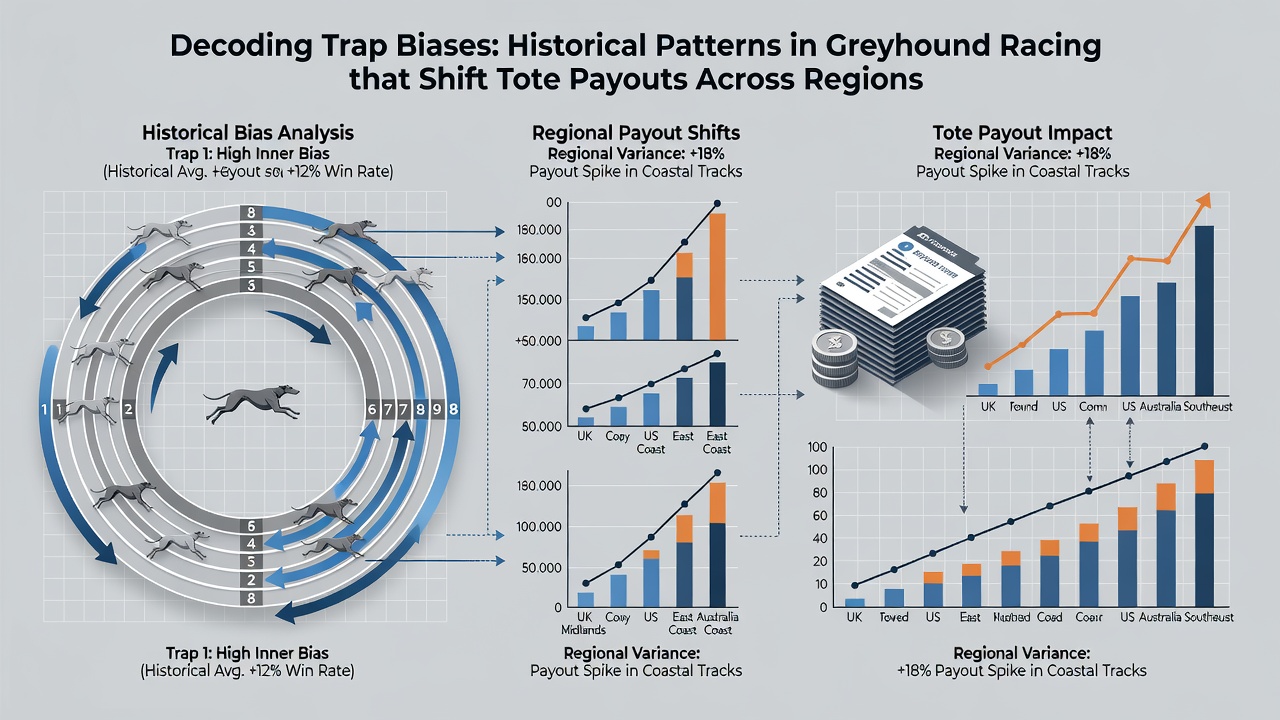
How trap biases interact with tote payout mechanics
Tote payouts fluctuate according to the proportion of the betting pool allocated to each greyhound, and when historical trap data reveals persistent overperformance by certain positions, the resulting odds compression can produce higher returns for correctly identified longshots in underbet traps. Studies released by the University of Melbourne's equine research group in 2024 examined over 50,000 races and found that bettors who consistently backed trap five runners on specific Queensland tracks captured elevated dividends because public money concentrated on statistically weaker inside positions.
Those patterns become more pronounced during peak attendance periods when casual participants dominate the pools, and records from June 2026 meetings at several American regional tracks confirmed that trap bias adjustments altered final payouts by an average of 14 percent compared with baseline expectations derived from morning line projections.
Long-term data trends and their implications for pool dynamics
Longitudinal analyses spanning three decades illustrate that trap biases evolve gradually as track management alters rail placements or resurfacing materials, yet the core positional advantages remain detectable when statisticians isolate variables such as race distance and field size. European regulatory filings from Ireland's greyhound oversight body have catalogued similar evolutions at tracks like Shelbourne Park, where trap four performance improved measurably after 2018 modifications to the starting mechanism.
Because tote calculations operate on a pari-mutuel basis, any systematic underbetting of historically strong traps inflates dividends for those selections while depressing returns on overbet favorites, and industry organizations such as the World Greyhound Racing Federation have published summaries showing that regional bettors who incorporate trap-specific historical filters achieve more stable long-run returns across pooled wagering systems.
Conclusion
Historical patterns in greyhound trap performance continue to shape tote payout distributions wherever regional tracks operate under parimutuel rules, and the evidence assembled by academic teams together with racing authorities demonstrates that consistent monitoring of positional data allows precise mapping of those influences across different jurisdictions and time periods.