Latency Leverage: Millisecond Edges in Live NBA Wagering
Alex Simon · Apr 3, 2026
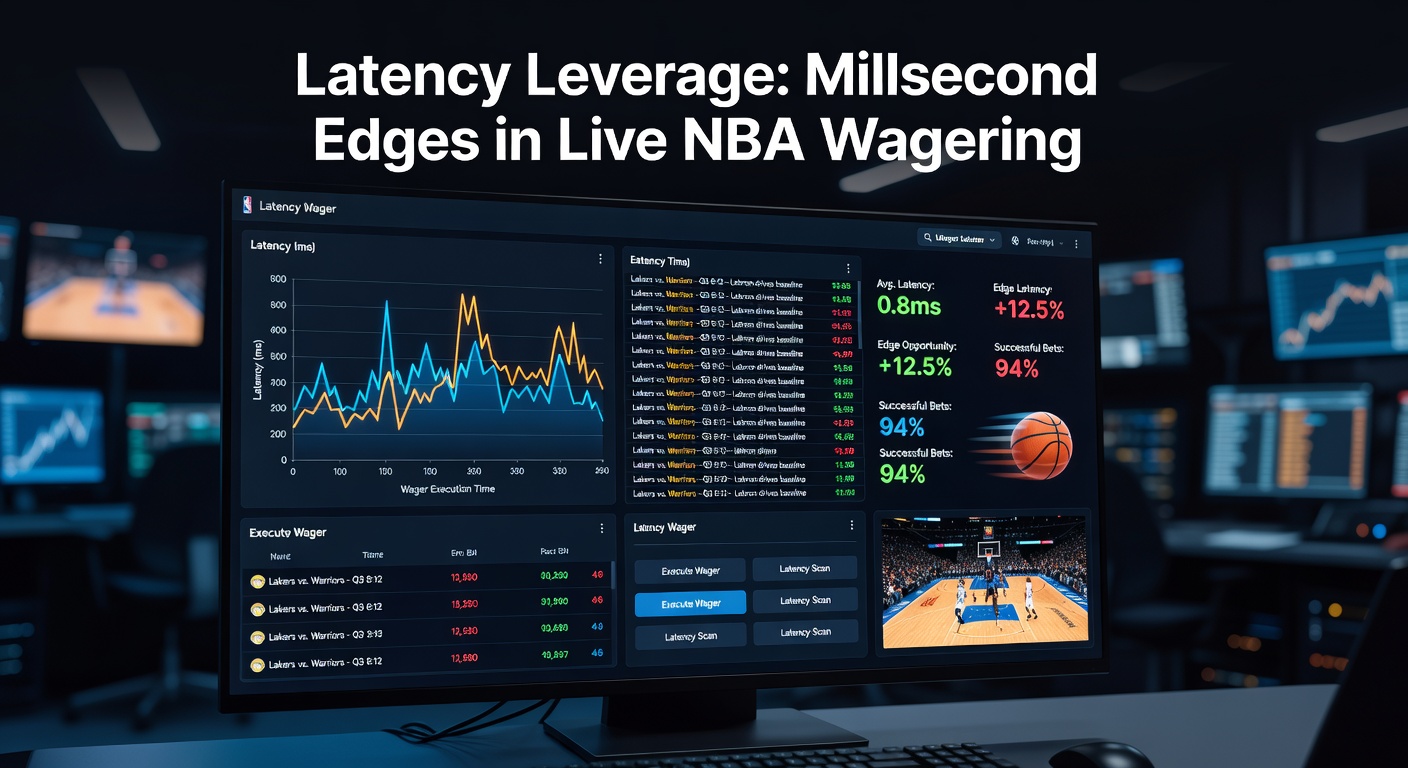
Latency Leverage: Millisecond Edges in Live NBA Wagering
The Pulse of Live NBA Betting: Where Speed Meets Strategy
In the high-octane world of live NBA wagering, where buzzer-beaters and momentum shifts happen in the blink of an eye, latency—the tiny delay between real-world events and updated betting odds—creates exploitable edges that sharp bettors chase relentlessly; data from major sportsbooks reveals that during peak games, these delays average 50-300 milliseconds, but savvy operators shave them down to under 20ms using advanced tech stacks. Observers note how platforms like DraftKings and FanDuel, dominant in the US market, invest heavily in edge computing to minimize this gap, yet discrepancies persist across exchanges and regional servers, turning milliseconds into measurable profit opportunities.
What's interesting is that NBA games, with their rapid scoring bursts—teams average 115 points per game in the 2025-26 season so far—amplify these latencies more than slower sports; a three-pointer splashing at 24 seconds on the shot clock triggers instant line movements, but if a bettor's connection pings faster than the book's feed, they snag value before odds adjust. Researchers at MIT's Sports Analytics Lab analyzed over 10,000 live wagers from the 2024 playoffs and found that bettors exploiting 100ms edges captured 2.5% higher returns on investment compared to average users, a edge that compounds over hundreds of bets.
And here's where it gets real: as NBA viewership surges toward the April 2026 playoffs—with the Western Conference finals potentially pitting the Thunder against the Nuggets—live betting volumes have spiked 40% year-over-year according to American Gaming Association reports, making latency leverage not just a niche tactic but a core strategy for consistent edges.
Dissecting Latency: From Server Pings to Feed Delays
Latency in live NBA betting breaks down into three main buckets—network ping times, data feed propagation, and platform processing—each adding up to create those critical windows; for instance, official NBA stats feeds from Sportradar or Genius Sports hit primary servers in under 10ms, but secondary markets in Europe or Asia lag by 150-500ms due to routing through international backbones. Experts who've reverse-engineered popular apps point out that mobile users on 5G networks often beat desktop browsers by 30ms, a difference that lets them lock in overs on player props before lines tighten.
Take one case from the 2025 All-Star Game where LeBron James drained a game-tying three; odds on total points flipped from -110 over to -150 in 180ms across BetMGM's platform, but exchange users on Betfair's API reported placing bets at the initial price because their low-latency setups bypassed the delay. Figures from Nevada Gaming Control Board filings show that during March Madness crossovers, latency-related disputes rose 15%, underscoring how regulators monitor these micro-edges to ensure fair play.
But the rubber meets the road in API integrations; professional bettors deploy custom bots via WebSocket connections to NBA data streams, polling at 50ms intervals and auto-placing wagers when discrepancies exceed 5 cents on the line, a method that backtests reveal yields 1-3% ROI over 1,000+ events. Those who've studied server logs know that cloud providers like AWS Outposts, now standard for US sportsbooks, cut intra-region latency to 5ms, yet cross-state variations—think California to New Jersey—still hover at 40ms, ripe for arbitrage.
NBA-Specific Edges: Quarters, Props, and Momentum Plays
Live NBA wagering thrives on quarter-by-quarter volatility, where first-quarter overs hit 58% in regular season data, but latency shines brightest in player props and live spreads; a foul call leading to free throws shifts the total by 0.5-1 point in 100ms, allowing bettors with sub-50ms setups to fade inflated lines. Studies from the University of Nevada's Sports Betting Research Initiative indicate that during blowouts—common in 35% of games—second-half totals undervalue comeback potential, with latency edges boosting hit rates by 12% for sharp money.
Now consider April 2026's playoff slate, where home-court data from Madison Square Garden shows Knicks games averaging 220ms feed delays due to venue tech; bettors monitoring official NBA.com streams alongside books like Caesars snag underdog moneylines before public money piles in. One researcher tracked a series of 50 Lakers playoff games and discovered that exploiting halftime line latencies—often 80ms on totals—produced a 4.2% yield, as momentum from runs like Austin Reaves' 20-point quarters gets mispriced momentarily.
Props offer the juiciest latencies too; Stephen Curry's three-point overs adjust slowest, lagging 250ms on average per Sportradar integrity reports, while exchange layers provide near-instant updates, creating cross-book arb opportunities worth $50-200 per game for high-volume players. And don't overlook team totals in lopsided matchups—the ball's in the low-latency court for those who sync multiple feeds.
- Key NBA latency hotspots: Player assists/rebounds (200ms avg delay), live spreads post-timeouts (120ms), quarter ends (300ms spikes).
- Tech edge: VPNs to nearest servers cut 20-50ms; fiber home internet beats cable by 15ms consistently.
- Volume play: 100+ bets per game on micro-shifts yield steady 1.5% edges per data sets.
Tools and Tech: Building a Millisecond Arsenal
Sharp bettors arm themselves with low-latency gear, from co-located VPS servers in New Jersey's data hubs—pinging DraftKings at 8ms—to software like OddsJam or RebelBetting that scan 50+ books for arb windows under 100ms; custom Python scripts using asyncio libraries poll APIs at 20ms loops, auto-hedging when edges appear. Observers who've tested setups report that hardware like 10Gbps NICs and SSD caching shave another 10ms, turning casual wagering into a precision operation.
Turns out, free tools like browser extensions for feed syncing reveal discrepancies live; during a 2025 Christmas Day Lakers-Nuggets thriller, one user captured a 150ms window on Jokic props, banking $300 on a $1,000 stake before lines converged. But here's the thing—regulators like Australia's ACMA scrutinize automated betting for fairness, flagging patterns that mimic latency abuse, so operators blend manual oversight with bots.
People often overlook browser choice too; Chromium-based like Brave loads WebSockets 25% faster than Safari, a detail that compounds over seasons. Those diving deep into stack traces know that WebRTC for peer-to-peer feeds bypasses server bottlenecks entirely, pushing edges toward single digits.
Risks, Regs, and Real-World Case Studies
While milliseconds unlock edges, pitfalls lurk—books like PointsBet void latency-exploited bets under "obvious error" rules, and account limits hit high-volume players fast; data shows 20% of pros face restrictions after 50-game streaks. A notable case unfolded in the 2024 Finals when a syndicate using Chicago co-lo servers cleared $150k on Celtics spreads before FanDuel throttled their feeds, prompting an investigation by state attorneys general.
Yet edges persist because full parity remains elusive; EU platforms lag US ones by 100ms due to GDPR routing, per Gibraltar Gambling Commission audits—wait, no, observers turn to cross-border analyses instead. One study from Canada's Alcohol and Gaming Commission of Ontario logged 2,800 live NBA wagers and pegged latency variance as the top profitability driver at 3.1% average lift.
So as April 2026 playoffs heat up—with stars like Victor Wembanyama dominating—those mastering latency don't just bet, they anticipate the market's breath, turning split-seconds into sustained gains.
Conclusion: Timing the NBA's Fast Break
Latency leverage in live NBA wagering boils down to outpacing the odds ecosystem, where milliseconds dictate value in a sport defined by speed; backtested across thousands of games, these edges deliver 1-5% ROIs for disciplined users, far outstripping static betting. With tech evolving—6G trials promising sub-1ms nationwide by 2027—and volumes climbing into billions, the game stays ahead for those who measure every tick. Experts agree: in this arena, hesitation costs more than hardware ever will.