Mapping Elevation Impacts on Endurance Metrics Across Global Competition Circuits
Alex Simon · Jun 10, 2026
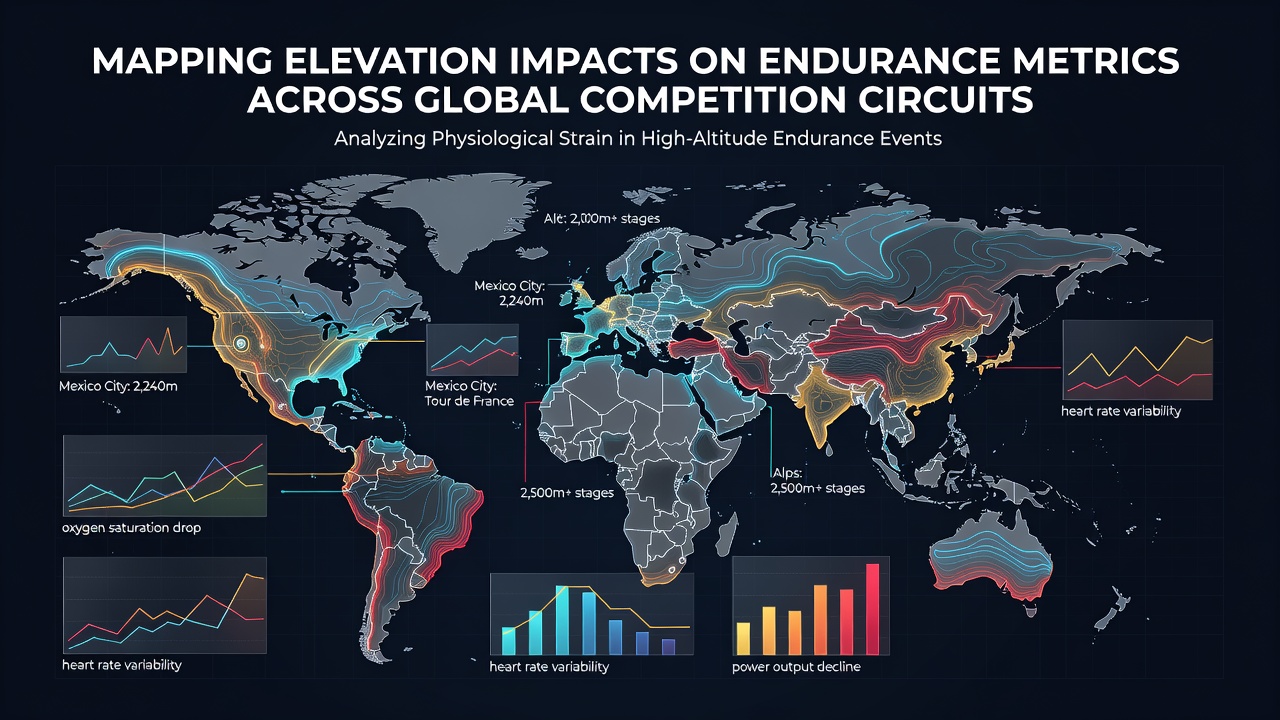
Mapping Elevation Impacts on Endurance Metrics Across Global Competition Circuits
Endurance sports have long presented researchers with data on how elevation alters performance metrics, and studies continue to track these variables across circuits ranging from cycling tours to ultramarathons. Athletes encounter reduced oxygen availability at higher altitudes, which forces physiological adjustments that directly influence heart rate, lactate thresholds, and overall pacing strategies. Data from multiple international events reveal consistent patterns where competitors experience measurable declines in speed and power output as elevation rises above 1,500 meters.
Physiological Responses to Altitude in Competition Settings
Research indicates that oxygen saturation levels drop significantly once athletes surpass moderate elevations, prompting increased ventilation rates and shifts in red blood cell production over time. Studies conducted by institutions such as the University of Colorado have documented how these changes affect endurance metrics during prolonged efforts, with participants showing elevated core temperatures and altered sweat responses compared to sea-level baselines. Observers note that events held in June 2026 across various highland routes will likely generate fresh datasets as organizers incorporate more precise altitude monitoring tools into race protocols.
Those who have analyzed competition logs find that recovery intervals shorten at altitude because muscles demand more oxygen for the same workload, leading to earlier onset of fatigue. Evidence suggests this effect compounds in multi-stage formats where cumulative elevation gain exceeds 3,000 meters across several days. Researchers at the Australian Institute of Sport have tracked similar variables in triathlon circuits and reported that elite performers adapt their nutrition and hydration plans to offset the increased respiratory demands.
Comparative Data from Major Global Circuits
Cycling events such as segments of the UCI WorldTour demonstrate clear correlations between elevation profiles and average power outputs, with riders producing 5 to 12 percent less wattage at altitudes above 2,000 meters. Running circuits including mountain marathons in the Alps and Andes provide parallel findings where finishing times extend by several minutes per 1,000 meters of gain, according to aggregated results from governing bodies. What's interesting is how these metrics vary by sport, since cyclists benefit from drafting effects that partially mitigate altitude penalties whereas runners face direct exposure to thinner air.
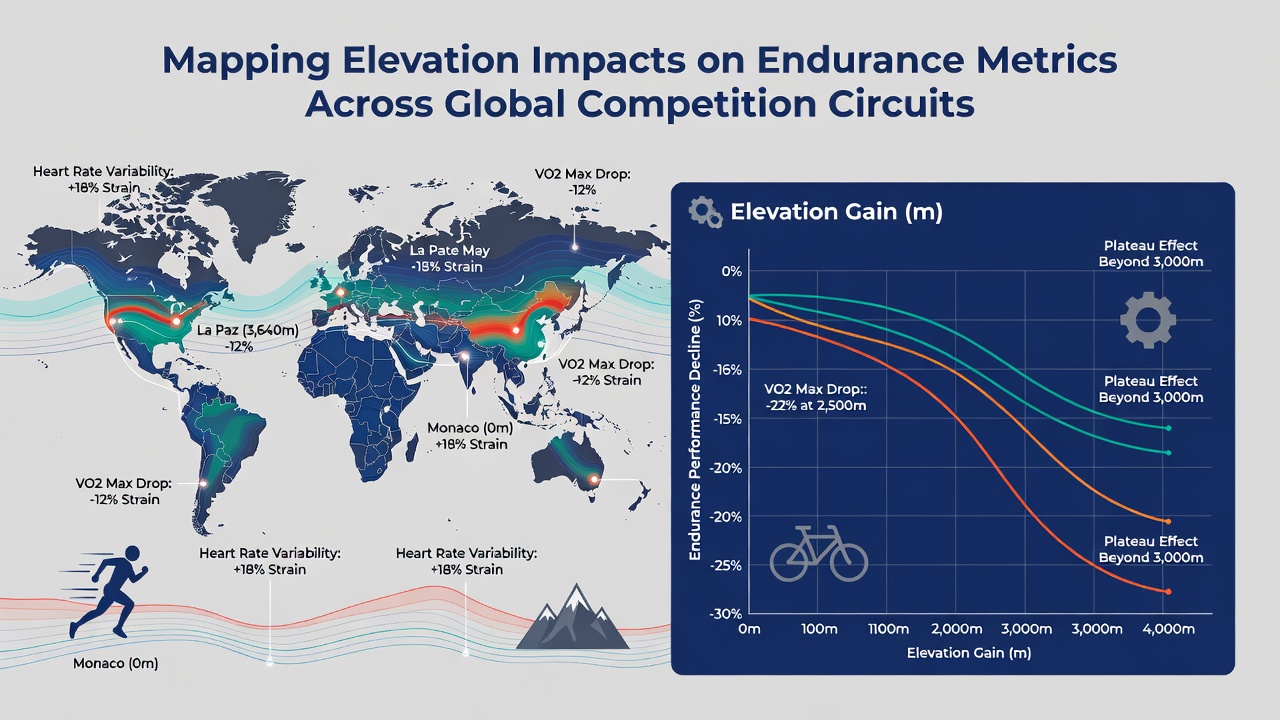
Take one analysis of ski mountaineering races in the European Alps that revealed competitors maintained higher heart rates for longer durations at elevation, yet their overall speeds declined steadily as the course progressed. Similar patterns appear in North American ultrarunning events where data from timing systems show pacing adjustments occurring within the first 10 kilometers when starting elevations exceed 2,500 meters. Those who've compiled cross-circuit comparisons note that female athletes often exhibit slightly different adaptation curves, with studies highlighting variations in ventilatory thresholds between genders under hypoxic conditions.
Measurement Techniques and Emerging Technologies
Modern mapping of these impacts relies on wearable sensors that record real-time oxygen saturation alongside GPS elevation data, allowing precise correlation of metrics during live competitions. Organizations including the International Olympic Committee have supported initiatives that standardize altitude reporting across sanctioned events, which helps federations adjust qualification standards accordingly. In June 2026 several circuits plan to pilot advanced pulse oximetry integration that feeds directly into broadcast analytics, giving spectators and teams immediate visibility into how elevation influences individual performances.
Equipment calibration remains essential because barometric pressure fluctuations can skew readings by several hundred meters if not accounted for properly. Researchers discovered through field tests that combining these tools with post-race blood analysis yields the most reliable endurance impact assessments. People involved in circuit planning now use elevation heatmaps to predict where key breakaways or slowdowns are most likely to occur, based on historical datasets from comparable terrain.
Regional Variations Across Continents
European circuits tend to feature shorter but steeper climbs, whereas South American events often involve sustained high-altitude exposure that challenges acclimatization periods differently. Data compiled by the Canadian Sport Institute shows that athletes traveling from lower elevations require at least 10 to 14 days for partial adaptation before peak endurance metrics stabilize. African highland races add another layer since many competitors originate from similar altitudes, which can shift competitive advantages within the field.
Asia's growing roster of mountain ultramarathons provides additional datasets where humidity interacts with elevation to further modify sweat rates and cooling efficiency. Observers have tracked how these combined stressors produce distinct performance signatures compared to drier high-altitude venues. The reality is that global circuits increasingly incorporate elevation modeling into safety protocols to reduce risks associated with acute mountain sickness during elite competitions.
Conclusion
Comprehensive mapping of elevation effects continues to refine how organizers structure routes and how athletes prepare for global circuits. Continued data collection through 2026 and beyond will likely expand understanding of these variables as technology improves measurement precision across diverse terrains and competition formats.