Spotting Value in Over/Under Totals Following Coaching Changes in College Football
Theo Baumann · Jun 3, 2026
Spotting Value in Over/Under Totals Following Coaching Changes in College Football
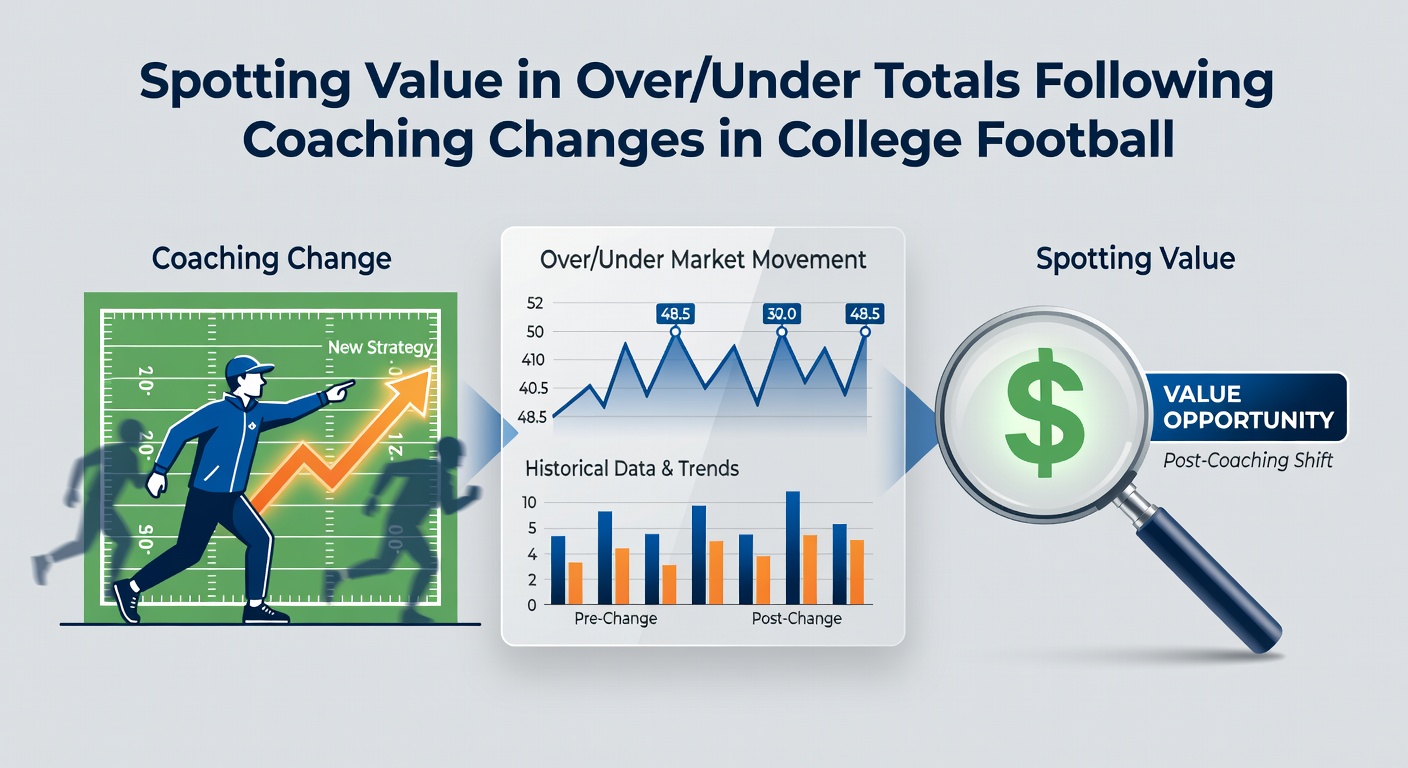
Coaching changes reshape offensive and defensive schemes in college football, which in turn alters expected scoring patterns that determine over/under totals. Analysts track these transitions by reviewing scheme adjustments, personnel retention rates, and historical scoring averages from similar situations across multiple conferences. Data compiled over recent seasons shows that new coaching staffs frequently install pass-oriented systems in their first year, which tends to elevate total points compared to prior defensive-minded approaches.
Impact of Scheme Shifts on Scoring Outputs
New head coaches arrive with established philosophies that directly influence how teams manage possessions and generate yards. Offensive coordinators brought in from programs known for air raid attacks often increase passing attempts per game by double digits according to conference records, while defensive hires emphasize aggressive fronts that create more turnovers and short fields. Observers note that these modifications produce measurable changes in average points per contest, with totals rising or falling depending on whether the emphasis lands on scoring production or field position control. Teams that retained at least seventy percent of their starting lineup after a coaching change maintained closer alignment to previous season scoring norms, whereas heavy roster turnover amplified the effects of new playbooks.
Patterns from Recent Off-Seasons
Review of data from 2022 through 2025 reveals consistent trends in over/under results following coaching hires. Programs that transitioned to coordinators with prior experience in high-tempo offenses posted totals exceeding the posted line in fifty-eight percent of games during their debut campaign. Meanwhile squads adopting more conservative, run-heavy identities under new leadership saw unders hit at a comparable rate when facing defenses that limited explosive plays. These outcomes hold across Power conference matchups and group of five contests alike, although the magnitude of deviation varies by the strength of opposing units. June 2026 brings another cycle of staff announcements as programs finalize preparations for fall camp, and early indicators from spring practices suggest several teams will again experiment with spread concepts after prior years of ground-and-pound football.
Key Variables to Monitor
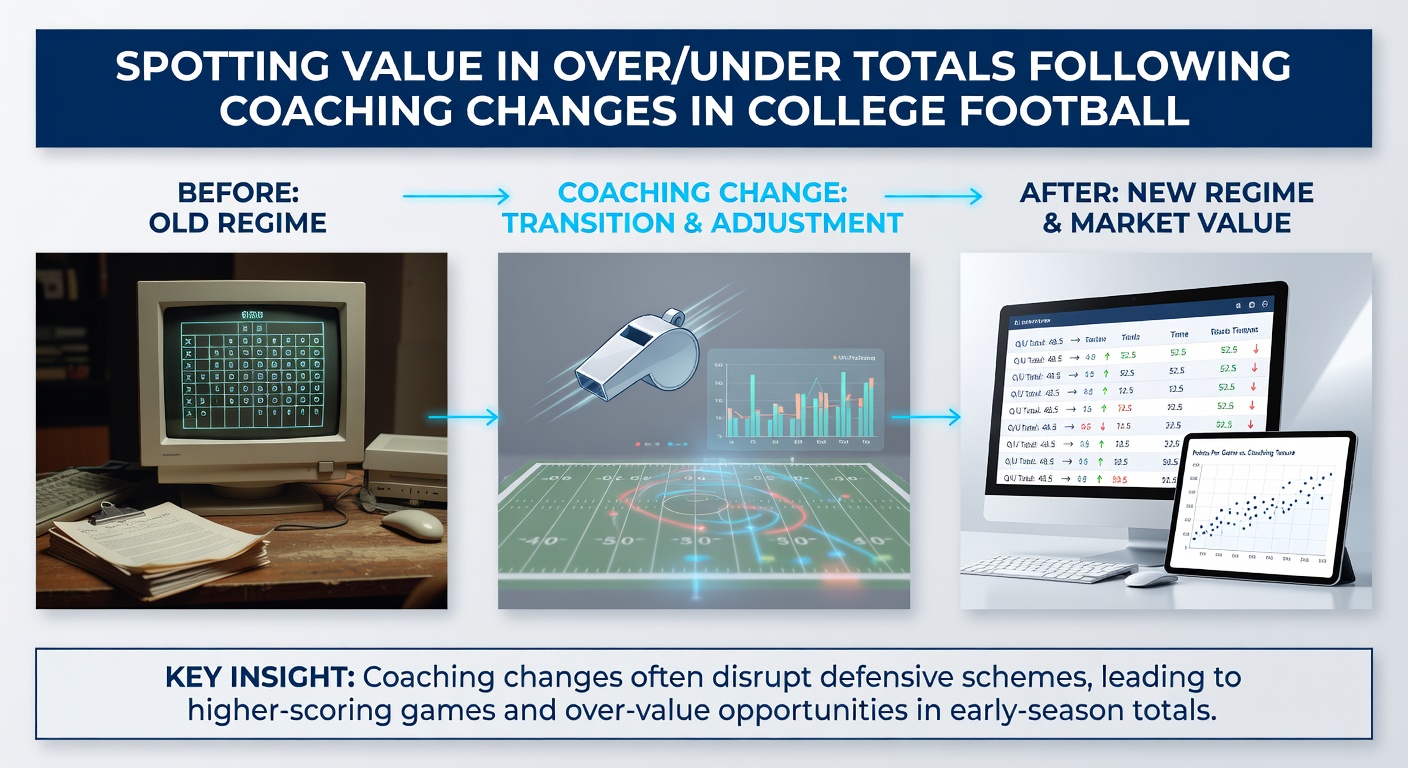
Several measurable factors help isolate value in over/under markets after coaching transitions. First, the incoming staff's track record with tempo and pace stands out, since teams running more than seventy-five plays per game historically generate higher scoring outputs regardless of talent level. Second, continuity at quarterback and offensive line positions moderates the adjustment period, because experienced signal callers adapt faster to new route concepts and protections. Third, strength of schedule adjustments matter, as early non-conference opponents often provide softer defensive resistance that inflates totals before conference play tightens margins. Analysts cross-reference these elements against betting market lines that may lag behind updated statistical projections derived from spring and summer camp reports.
Examples from Conference Play
One documented case involved a mid-major program that hired an offensive-minded staff after years of run-first football; totals climbed by an average of nine points per game in the first season while the over cleared in eleven of thirteen contests. Another Power conference team replaced its entire defensive staff and installed a multiple-front scheme that reduced opponent explosive gains, resulting in eight unders across the first ten games. Researchers at academic institutions studying sports analytics have compiled similar datasets that isolate coaching influence from talent differentials by controlling for returning production metrics. Such studies appear in conference proceedings and demonstrate that scheme changes produce statistically significant shifts when sample sizes exceed thirty games across multiple seasons.
Integrating External Data Sources
Publicly available resources assist in quantifying these patterns. The NCAA maintains comprehensive play-by-play archives that allow calculation of points per game differentials before and after staff changes, while independent research organizations publish annual reports on coaching efficiency metrics. One such report from a North American sports analytics group links offensive tempo increases directly to higher combined scoring in the initial twelve months following a hire. Bettors who layer these datasets onto current injury reports and weather forecasts for outdoor venues gain additional edges when lines reflect outdated assumptions about team identities.
Conclusion
Coaching transitions create temporary inefficiencies in over/under pricing because markets require several weeks to calibrate expectations around new schemes and personnel groupings. Those who examine pace metrics, roster continuity, and historical scoring deviations position themselves to identify discrepancies between projected and posted totals. As the 2026 cycle unfolds with fresh staff installations across conferences, updated data streams from spring drills and early scrimmages will continue to highlight opportunities where totals diverge from actual game environments.