Tracking Player Fatigue Metrics Across Back-to-Back Fixtures in European Basketball Leagues
Cameron Hoffmann · Jun 1, 2026
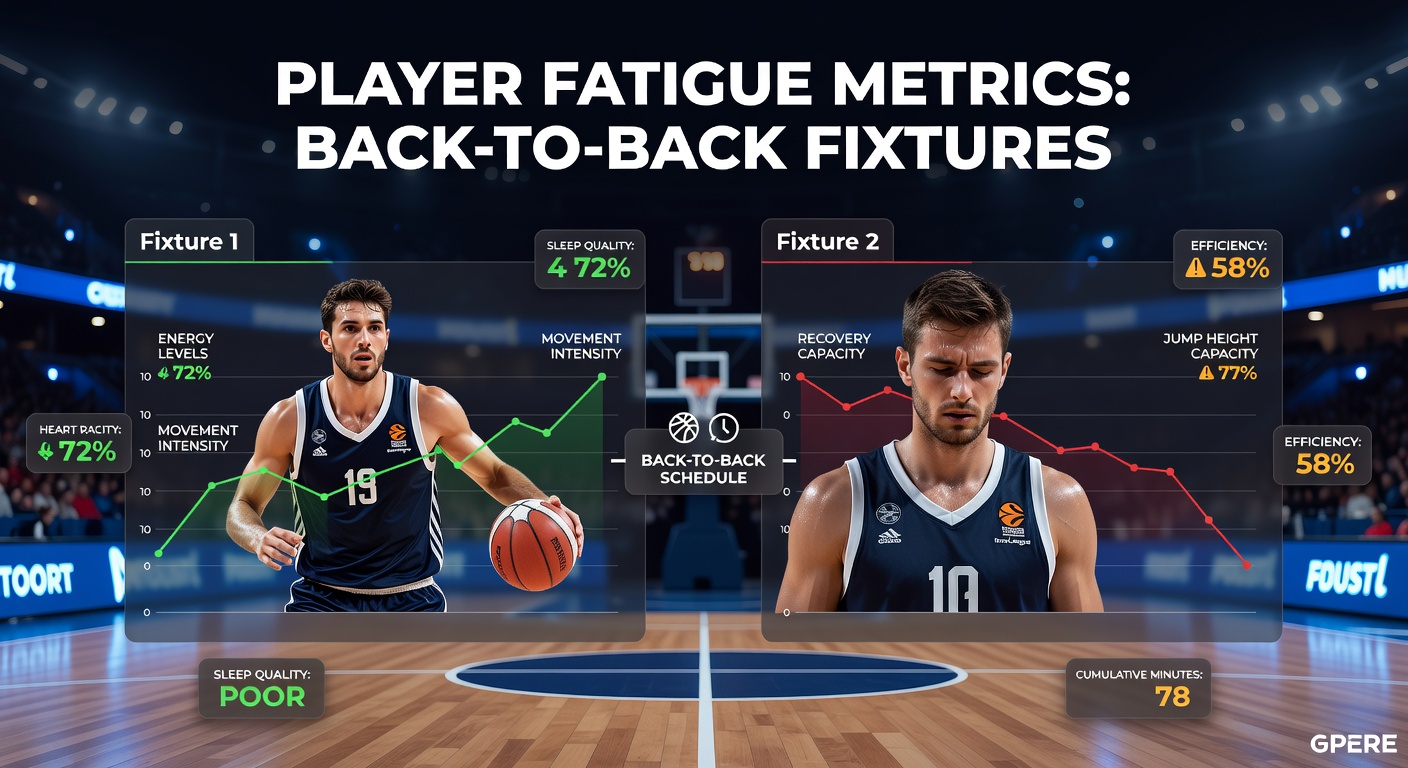
Tracking Player Fatigue Metrics Across Back-to-Back Fixtures in European Basketball Leagues
European basketball leagues schedule back-to-back fixtures more frequently than many observers expect, and teams have turned to detailed fatigue tracking to maintain competitive edges. Leagues such as the EuroLeague, Spain's ACB, Germany's BBL, and Italy's Lega Basket Serie A pack games into tight windows, especially during December through March, while June 2026 marks the close of another demanding campaign where analysts review season-long patterns. Data collection now combines wearable sensors, sleep logs, and performance statistics to quantify how consecutive games affect player output.Schedule Demands Across Major Competitions
Back-to-back games arise when domestic cups, EuroLeague rounds, and national league matches overlap, and researchers discovered that some clubs face three contests inside five days during peak periods. The EuroLeague alone lists up to 34 regular-season games plus playoffs, while national leagues add another 30-plus fixtures. This density forces medical staffs to monitor recovery windows measured in hours rather than days. According to figures from the European basketball analytics consortium, average travel distance between consecutive away games reached 850 kilometers in the 2025-26 season, adding another layer of physical stress.
Primary Fatigue Indicators
Teams track several objective markers rather than relying on subjective reports alone. Heart-rate variability collected overnight provides one early signal of accumulated load, while jump-height tests conducted before morning shootarounds reveal neuromuscular fatigue. Minutes played per game, combined with high-intensity movement data from optical tracking systems, allow staff to calculate external load. Internal load metrics include session rating of perceived exertion multiplied by duration, a method validated across multiple professional cohorts. Blood markers such as creatine kinase levels appear in some protocols, though daily use remains limited to high-stakes playoff stretches.
Technology Integration in Team Environments
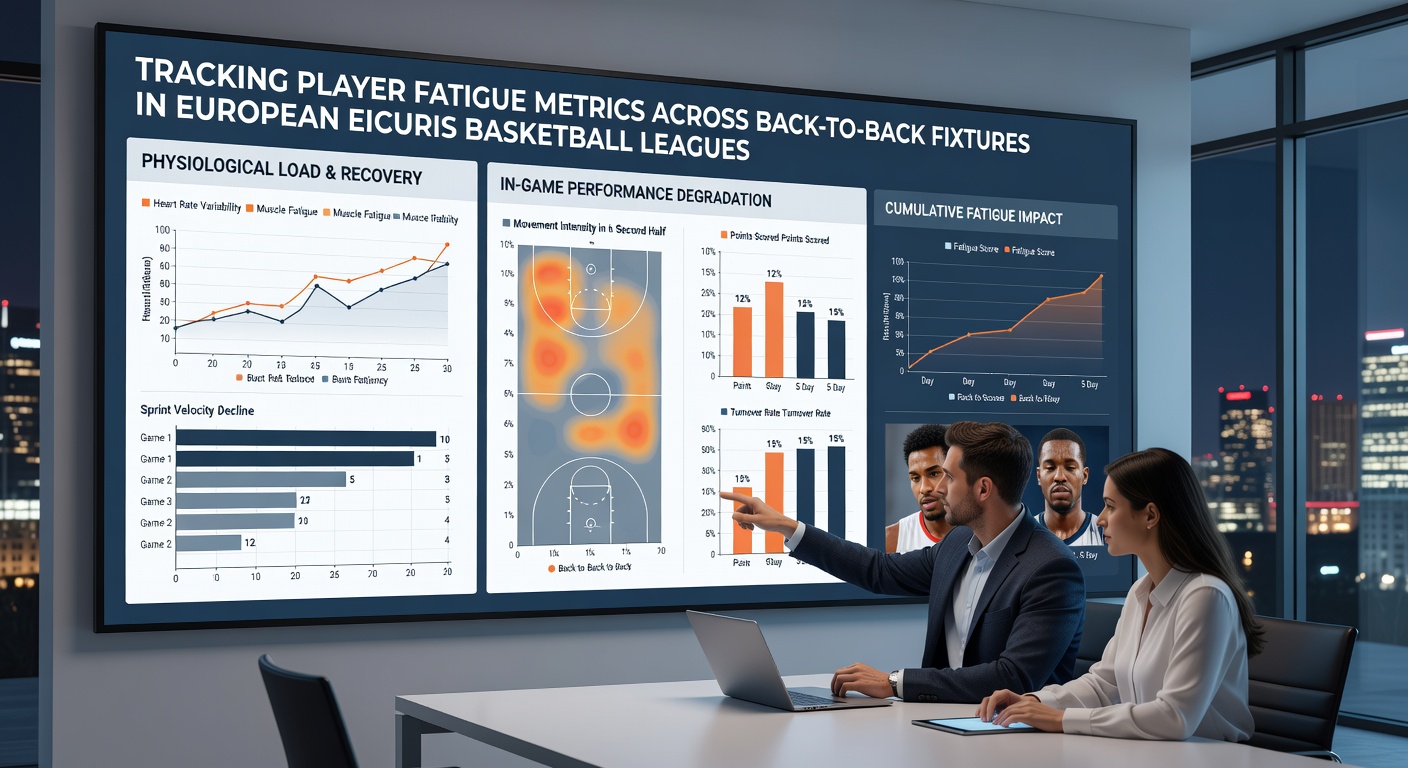
Clubs deploy GPS-enabled vests and wrist-based optical sensors that stream data to centralized dashboards, and these platforms generate automated alerts when a player's rolling seven-day load exceeds individualized thresholds. In Spain's ACB, several teams share anonymized datasets with university partners for longitudinal studies, while German clubs often collaborate with the Olympic Training Center in Berlin. The result is a growing library of case profiles that show how different positions respond to identical schedules. Guards, for instance, accumulate higher total accelerations yet recover faster on average than centers, according to aggregated reports released in early 2026.
Performance Correlations Documented in Recent Seasons
Analyses of 2024-25 and 2025-26 campaigns indicate measurable drops in shooting accuracy and defensive closeout speed when players log more than 34 minutes in the first game of a back-to-back set. One study coordinated across three EuroLeague clubs found that second-game three-point percentages declined by 4.2 percentage points on average when the preceding contest exceeded 40 total team possessions in the final quarter. Rebound rates also shifted, with contested rebounding success falling when sleep duration dropped below six hours between tip-offs. These patterns hold across multiple nationalities, suggesting the effects stem from fixture density rather than roster composition alone.
Recovery Protocols and Scheduling Adjustments
Coaching staffs now rotate lineups earlier in back-to-back sequences, and load-management decisions appear in official game reports submitted to league offices. Some clubs schedule light film sessions instead of full practices on travel days, while others implement cold-water immersion protocols timed to circadian rhythms. Data from Italian Serie A teams shows that structured napping windows of 20 to 30 minutes, combined with compression garments during flights, correlate with steadier heart-rate variability readings the following morning. National federations have begun discussing protected rest periods, yet current regulations still permit up to two back-to-backs per month without mandatory rest mandates.
Future Directions for European Basketball Analytics
Integration of machine-learning models continues to expand, and several organizations now forecast individual fatigue scores 48 hours ahead using historical load, travel, and opponent pace as inputs. These projections feed directly into rotation planning software used by coaching staffs. Partnerships with academic institutions in France and the Netherlands have produced open-source algorithms that smaller-budget clubs can adapt, widening access to advanced monitoring. As the 2026 off-season begins, analysts expect further refinement of position-specific thresholds and greater standardization of data-sharing agreements across borders.
Conclusion
European basketball has moved from reactive recovery methods to proactive fatigue management built on continuous data streams. Back-to-back fixtures remain a structural feature of the calendar, yet the metrics now available allow teams to anticipate and mitigate performance declines. Continued collaboration between clubs, leagues, and research groups will likely produce even more precise tools as the next seasons unfold.