Unpacking Travel Fatigue Metrics: How Cross-Timezone Journeys Shape Underdog Edges in CONCACAF League Encounters
Cameron Hoffmann · Jun 22, 2026
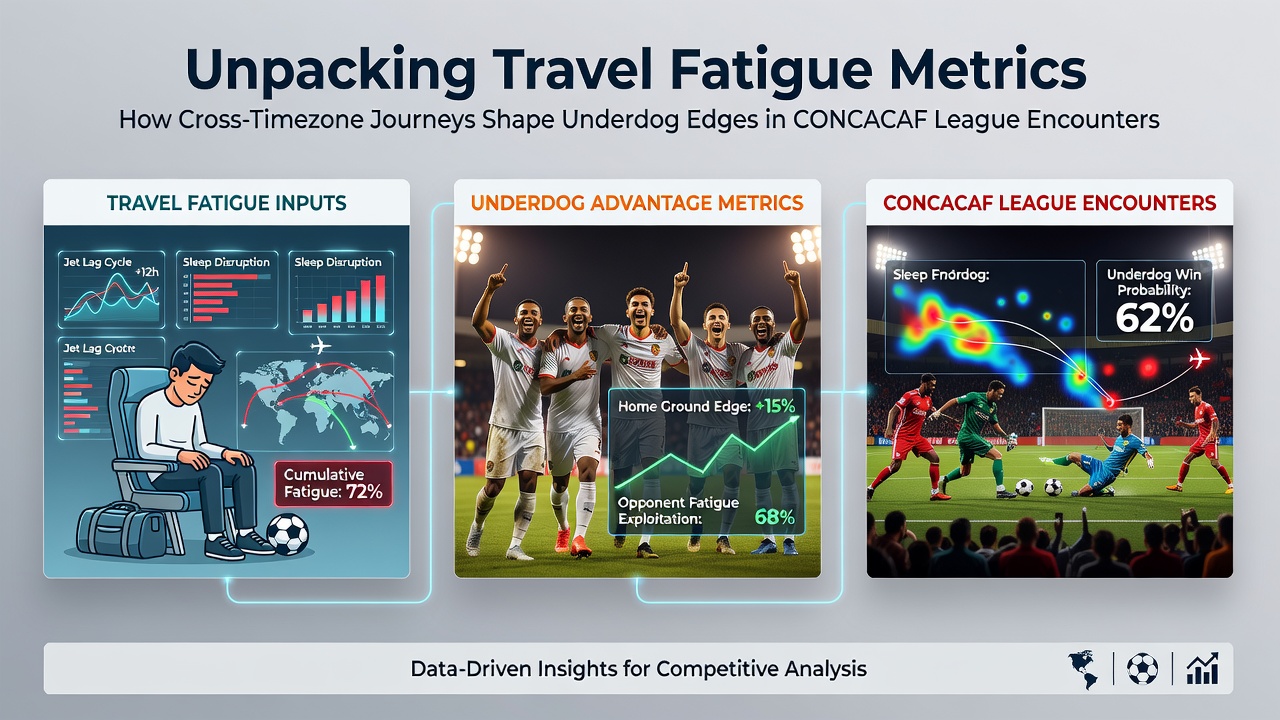
Unpacking Travel Fatigue Metrics: How Cross-Timezone Journeys Shape Underdog Edges in CONCACAF League Encounters
Cross-timezone travel in CONCACAF competitions creates measurable disruptions that alter team outputs, particularly when squads move between North American, Central American, and Caribbean venues. Researchers track these effects through sleep logs, heart rate variability, and match statistics that show consistent patterns across multiple seasons. Data from league fixtures indicate that teams crossing three or more time zones often exhibit delayed reaction times and reduced high-intensity running in the opening 30 minutes of play.
Defining Travel Fatigue Metrics in Regional Contexts
Analysts compile metrics that combine circadian rhythm shifts with physical recovery timelines, and these datasets draw from wearable technology deployed during CONCACAF Champions Cup and domestic league schedules. Figures reveal that eastward flights produce stronger negative effects than westward ones because the body clock advances rather than delays, which forces players to compress sleep cycles. Observers note that underdog sides from smaller federations sometimes benefit when opponents arrive with accumulated deficits in neuromuscular function.
Studies conducted at institutions across the Americas document how a four-hour time difference correlates with a 12-15 percent drop in sprint distance covered during the first half. Such measurements come from GPS tracking systems used by clubs in Major League Soccer and Liga MX, where schedules frequently pair teams separated by multiple zones. The resulting performance gaps appear most pronounced in matches scheduled within 48 hours of arrival.
Patterns Across CONCACAF Fixtures and Time Zone Crossings
League encounters between teams based on the Pacific coast and those in the Caribbean basin generate repeated examples of these dynamics. A club traveling from Vancouver to Kingston crosses three zones and typically requires five to seven days for full physiological adjustment, whereas shorter hops within Central America produce milder impacts. Match reports compiled over recent campaigns show that visiting underdogs secure points at higher rates when the home side has completed a long-haul journey in the preceding week.
Performance analysts cross-reference these outcomes with official match logs that capture metrics such as pass completion under pressure and defensive recovery speed. The patterns hold across both group stage and knockout ties, suggesting structural rather than random variation. Teams with access to chartered flights and on-board sleep protocols demonstrate faster mitigation of these effects compared with those relying on commercial carriers.
Physiological Mechanisms and Performance Data
Disruption of melatonin production and core temperature rhythms forms the core mechanism behind observed declines, and laboratory simulations at North American universities replicate these conditions to isolate variables. Evidence indicates that cognitive processing speed decreases measurably after eastward crossings, which directly influences decision-making in high-tempo phases of play. Underdog edges emerge when better-rested squads capitalize on these windows before the traveling side regains baseline alertness.
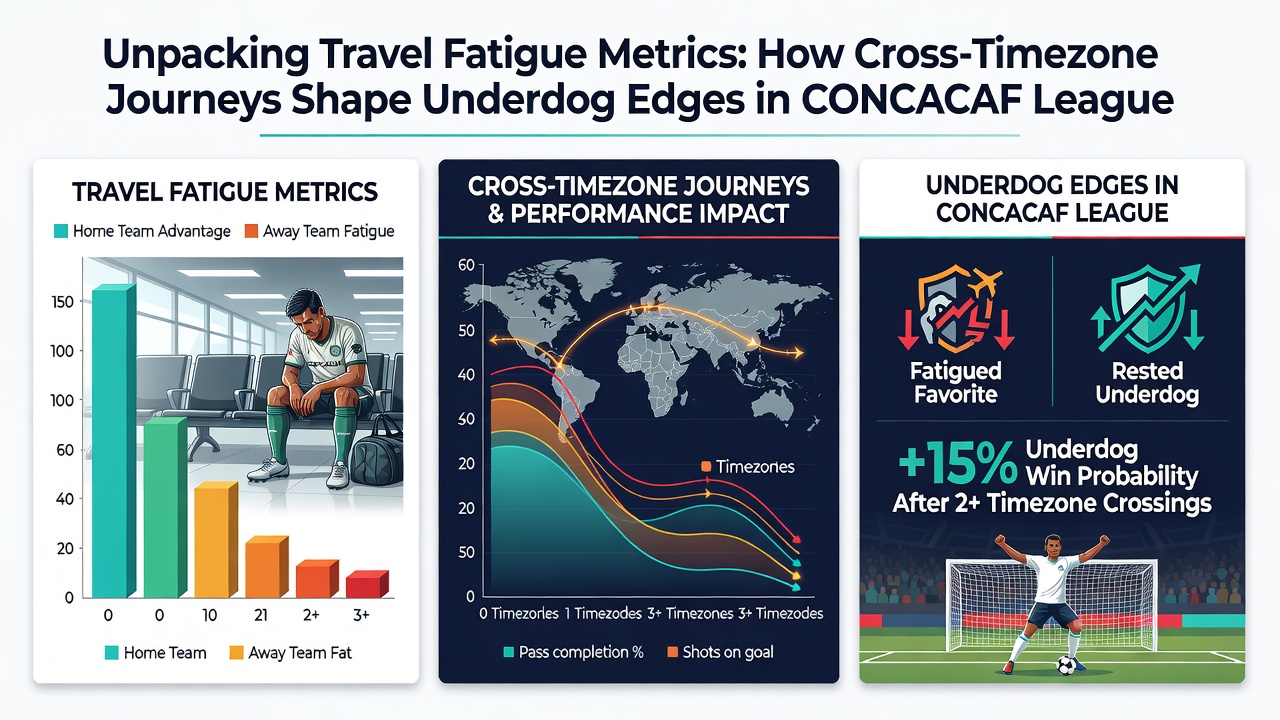
Longitudinal tracking from the 2024 through 2026 seasons shows that teams averaging more than 2,500 kilometers per away fixture display elevated injury incidence in subsequent domestic games. These correlations appear in datasets maintained by regional medical committees that monitor player welfare across federations. Recovery timelines lengthen further when matches occur in humid Caribbean environments that compound dehydration risks already heightened by air travel.
Strategic Adjustments and Scheduling Influences in 2026
Coaching staffs now incorporate targeted light exposure protocols and nutrition timing to accelerate adaptation, and several Liga MX and MLS clubs publish anonymized recovery data that confirm modest gains from these interventions. June 2026 schedules feature condensed fixture lists ahead of international windows, which increases the frequency of rapid turnarounds between distant venues. Clubs that rotate personnel strategically during these periods maintain higher collective output levels than those relying on fixed starting lineups.
Statistical models developed by performance research groups in Canada and Mexico predict that a three-zone shift combined with less than 72 hours between matches elevates the probability of draws or narrow away wins for underdog sides. These projections incorporate historical results from CONCACAF league play and account for variables such as pitch dimensions and altitude differences that interact with fatigue. Teams aware of these metrics adjust training loads in the days before departure to preserve key physical reserves.
Conclusion
Travel fatigue metrics continue to shape outcomes in CONCACAF league encounters as data collection methods grow more precise and schedules remain geographically demanding. Teams that quantify circadian impacts and implement evidence-based recovery measures reduce the performance penalties associated with cross-zone journeys, while opponents without similar preparation encounter measurable disadvantages in the early stages of matches. Ongoing monitoring through wearable technology and league-wide reporting systems provides clearer pictures of how these factors interact season after season.